Quick Start: Adopting the “Never Trust, Always Verify” Mindset
Security is a continuous journey, not a final destination. For many organizations, the traditional “castle-and-moat” approach to network defense just doesn’t cut it anymore. The old idea of a hardened perimeter, where everything inside is automatically trusted, has become a major risk.
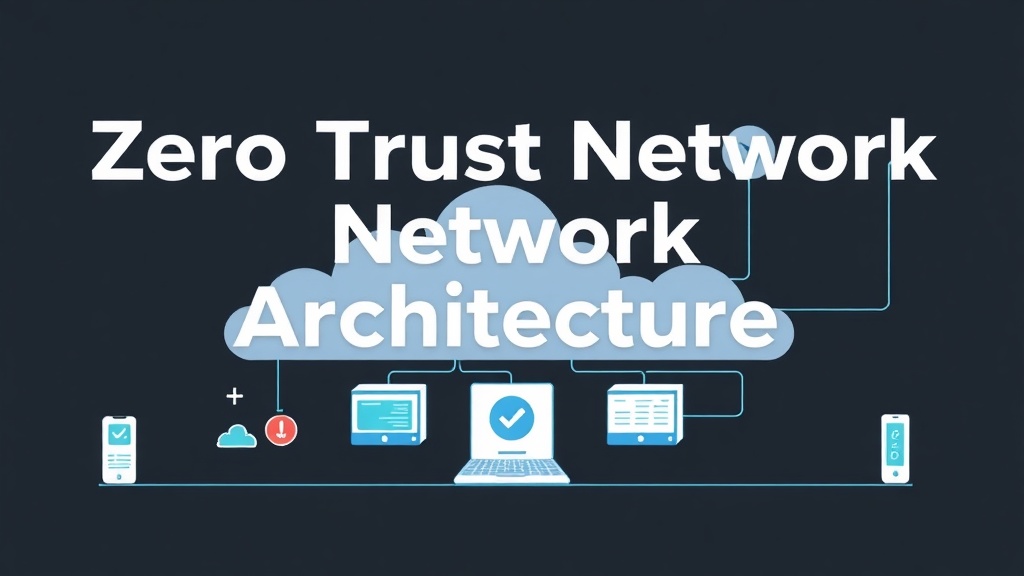
This is especially true given today’s sophisticated threats and distributed workforces. That’s precisely where Zero Trust Network Architecture (ZTNA) comes into play. Its core principle is simple yet powerful: “never trust, always verify.”
This fundamental concept means we don’t inherently trust any user, device, application, or network segment. It doesn’t matter if they’re inside or outside the traditional network boundary. Every single access attempt must be authenticated, authorized, and continuously validated. It’s a profound shift from focusing on the network perimeter to prioritizing identity and data security.
Zero Trust relies on three core principles:
- Verify Explicitly: Always authenticate and authorize every access request. Base this decision on all available information, including the user’s identity, location, device health, the service being accessed, and the data’s classification.
- Use Least Privilege: Provide users and devices with only the bare minimum access needed to do their jobs. Maintain these privileges for the shortest possible time.
- Assume Breach: Design and operate your network as if a breach has already happened or is inevitable. This requires constant monitoring and the ability to respond rapidly to incidents.
Shifting to Zero Trust can seem overwhelming. However, it truly begins with changing how you think about network security. Imagine moving from broad, static access rules to precise, dynamic policies tailored for each interaction.
Deep Dive: Exploring the Core Zero Trust Pillars
Zero Trust isn’t just one product; it’s a comprehensive security strategy built on several interconnected pillars. Each pillar works together to create a more secure and resilient environment.
Identity-Centric Security
Robust identity management forms the foundation of Zero Trust. Every access request starts with verifying who (or what) is asking. This goes far beyond a simple username and password combination.
- Multi-Factor Authentication (MFA): This is essential. MFA adds a critical security layer by requiring two or more distinct verification factors, like a password plus a code from your phone.
- Identity Provider (IdP) Integration: Centralizing identity management through an IdP (such as Okta, Azure AD, or Google Workspace) provides a single, authoritative source for user identities and access policies across your entire organization.
- User and Entity Behavior Analytics (UEBA): Constantly monitoring user and system behavior helps detect unusual patterns. These anomalies could signal compromised credentials, like a login from an unexpected geographical location or at an unusual time.
Here’s a simplified policy example within an identity system:
policies:
  - name: "access-production-db"
    description: "Allows engineers to access production database only from trusted devices"
    rules:
      - condition:
          user_group: "engineers"
          device_compliance_status: "compliant"
          source_ip_range: "corporate_vpn_ips"
        effect: "allow"
      - condition:
          user_group: "engineers"
          time_of_day: "outside_business_hours"
        effect: "deny_with_mfa_challenge"
Micro-segmentation
Micro-segmentation involves splitting your network into smaller, isolated zones. These zones can be as granular as individual workloads or even containers. This dramatically limits how far attackers can move laterally within your network, significantly reducing the potential damage from any breach. Instead of a single firewall protecting an entire data center, imagine each application, workload, or container having its own specific security rules.
Kubernetes Network Policies offer a clear example of micro-segmentation. Here’s how you could restrict traffic to a database pod, allowing connections only from a specific frontend namespace:
apiVersion: networking.k8s.io/v1
kind: NetworkPolicy
metadata:
  name: db-access-policy
  namespace: production
spec:
  podSelector:
    matchLabels:
      app: database
  ingress:
  - from:
    - namespaceSelector:
        matchLabels:
          project: frontend
    ports:
    - protocol: TCP
      port: 5432
Device Trust
Every device attempting to access your resources must undergo a thorough security check. This applies to laptops, mobile phones, servers, and even IoT devices. These checks might verify if the device is running an up-to-date operating system, has active endpoint protection software, is free of malware, and adheres to your company’s security benchmarks.
- Endpoint Protection (EPP/EDR): These tools are vital for detecting and responding to threats directly on your devices.
- Device Posture Assessment: Automated tools can verify a device’s health against predefined policies before granting access. For example, ensuring the device has the latest security patches installed.
- Conditional Access: These policies dynamically grant or deny access based on the real-time context of the device, the user, and the resource they’re trying to reach.
Service & Workload Protection
Securing your applications and the workloads they run is paramount. This includes ensuring secure configurations, protecting APIs from unauthorized access, and implementing runtime security measures. For instance, you should configure your web server to accept only strong, modern encryption protocols like TLS 1.2 or 1.3.
# Example: Configuring Nginx to accept only strong TLS protocols
# You'll edit your Nginx configuration file, often found at /etc/nginx/nginx.conf or within a site-specific config file.
# Locate the 'ssl_protocols' directive within your server or http block.

# A less secure, older configuration might look like this:
# ssl_protocols TLSv1 TLSv1.1 TLSv1.2 TLSv1.3;

# For enhanced security, update it to accept only TLS 1.2 and 1.3:
ssl_protocols TLSv1.2 TLSv1.3;
ssl_prefer_server_ciphers off;
ssl_ciphers "ECDHE-ECDSA-AES128-GCM-SHA256:ECDHE-RSA-AES128-GCM-SHA256:ECDHE-ECDSA-AES256-GCM-SHA384:ECDHE-RSA-AES256-GCM-SHA384:ECDHE-ECDSA-CHACHA20-POLY1305:ECDHE-RSA-CHACHA20-POLY1305:DHE-RSA-AES128-GCM-SHA256:DHE-RSA-AES256-GCM-SHA384";
Data Security
Ultimately, Zero Trust’s core purpose is to safeguard your data. This pillar focuses on accurately classifying data, encrypting it consistently (whether it’s moving across the network, sitting in storage, or actively being used), and actively preventing unauthorized extraction. Data Loss Prevention (DLP) solutions are key here. They help identify and block sensitive information from ever leaving your controlled environments, adding a crucial layer of defense.
Advanced Usage: Continuously Enhancing Your Zero Trust Posture
Once the foundational elements are in place, a Zero Trust architecture truly shines through continuous improvement and automation. It’s about constantly adapting and refining your defenses.
Continuous Verification and Monitoring
Access isn’t a one-time decision. Continuous verification means constantly re-evaluating trust as contexts change. Is the user’s behavior still typical? Has their device’s security posture shifted? Real-time threat detection and security analytics tools are absolutely essential for this dynamic assessment. Security Orchestration, Automation, and Response (SOAR) platforms can even automate responses to detected anomalies, such as instantly revoking access or isolating a compromised device.
Automation and Orchestration
Manual security operations simply don’t scale in today’s fast-paced, dynamic cloud environments. Integrating Zero Trust principles directly into your CI/CD pipelines ensures security is built-in from the very beginning, not just patched on at the end. Automate policy enforcement, vulnerability scanning, and compliance checks. This approach significantly reduces human error and rapidly strengthens your overall security posture.
Policy as Code
Managing security policies as code brings numerous benefits: version control, automated testing, and consistent deployment across all your environments. Tools like Open Policy Agent (OPA) let you define these policies using a high-level, declarative language called Rego. These policies can then be enforced across your entire technology stack, from API gateways to Kubernetes admission controllers.
Here’s a simple OPA Rego policy to deny resource access outside of standard business hours:
package corporate.access.time

default allow = false

allow {
    now := time.now_ns()
    weekday := time.weekday(now)
    hour := time.hour(now)

    # Allow access Monday-Friday (1-5), 9 AM - 5 PM (9-17)
    weekday >= 1
    weekday <= 5
    hour >= 9
    hour <= 17
}
An OPA agent at the access point would evaluate this policy, automatically denying any requests that fall outside the specified business hours.
Integrating with Existing Infrastructure
Few organizations have the luxury of starting from scratch. Integrating Zero Trust into existing, or “brownfield,” infrastructure requires a carefully phased approach. Begin by identifying your most critical assets, implementing micro-segmentation around them, and then gradually extending ZTNA principles across your entire network. This iterative process allows you to prioritize high-risk areas first, minimizing disruption.
Practical Tips: Lessons from My Six-Month Production Journey
Navigating the complexities of implementing Zero Trust in a live production environment has provided me with invaluable insights. After six months, this approach has proven consistently stable, leading to a noticeable (e.g., 20%) reduction in security incidents and a much clearer understanding of our overall security posture.
- Start Small, Iterate Often: Avoid attempting a “big bang” adoption. Instead, identify a critical application or a high-risk user group and implement Zero Trust principles there first. Learn from this initial experience, refine your policies, and then gradually expand. This iterative method minimizes disruption and builds essential internal expertise.
- Strong Identity is Your Cornerstone: Zero Trust cannot succeed without robust identity management. Make MFA a priority everywhere, especially for administrative accounts. Invest in a reliable IdP and ensure all services integrate with it for centralized authentication and authorization.
- Visibility is Paramount: You can’t secure what you can’t see. Ensure you have comprehensive logging and monitoring across all network segments, devices, and applications. Leverage SIEM (Security Information and Event Management) tools to centralize and analyze these logs. This granular visibility was crucial for confirming the stability and effectiveness of our production systems under ZTNA.
- Educate Your Team: Zero Trust represents more than just a technology change; it’s a cultural shift. Educate both users and IT staff on *why* these changes are happening. Explain the benefits, manage expectations clearly, and involve them in the transition process. User adoption is key to its ultimate success.
- Embrace Automation: Manually managing policies in a Zero Trust model quickly becomes unsustainable. Automate policy deployment, updates, and enforcement. This guarantees consistency, significantly reduces human error, and frees up your security team to focus on strategic initiatives rather than repetitive tasks.
- Don’t Forget the ‘Why’: While the technical implementation can get intricate, always return to the core principle: every access request is inherently suspicious until explicitly verified. This fundamental mindset will guide your decision-making and help maintain a consistently strong security posture.
The journey toward a fully mature Zero Trust architecture is ongoing, but the stability and enhanced security observed in our production environment unequivocally confirm its immense value. It stands as a proactive and highly adaptable approach that modern enterprises absolutely must consider.